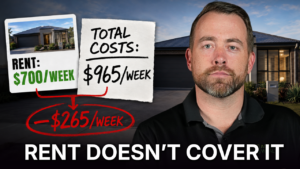

Most people hear “housing shortage” and think of it as a political problem. Something for the government to sort out, and a reason to feel a bit gloomy about the whole thing. If you’re an investor, it’s worth looking at differently. A shortage that isn’t getting fixed is one of the strongest forces you can have working in your favour — provided you understand what it actually changes.
We cover this in a recent episode of our podcast, Inside Access Property. This post walks through the same ground in more detail, with the sources behind each number.
Why the shortage exists in the first place
It comes down to demand climbing on one side, and supply falling behind on the other.
- 1Demand keeps climbing.Population growth and migration mean more people needing somewhere to live, every year.
- 2Supply keeps falling behind.Building approvals lost momentum in 2026, squeezed by rising construction costs and global supply disruptions, and it still takes years to get a project from approval to keys in the door.
- 3The gap keeps widening.The difference between how many homes we need and how many we’re actually building grows larger each year, not smaller.
What this actually means if you’re an investor
Strip away the politics, and this is just supply and demand. When there are more people than homes, the homes that already exist become more valuable and easier to rent. Vacancy rates stay tight, and rents tend to rise year after year.
That’s exactly why low supply is one of the first things worth checking before buying any property. A national shortage is that same signal, playing out everywhere at once.
Why the type of property you buy matters more than ever
A shortage doesn’t mean you should rush out and buy anything. What matters more is which type of property you buy — and specifically, whether it’s new or established.
A new build adds a home to the market. An established one just changes who owns the existing home. That distinction is also why the tax system now treats the two differently: since the 2026 Federal Budget, negative gearing has been restricted to new builds for any established property bought after 12 May 2026. We’ve covered the full mechanics of that change, and what it means dollar for dollar, in a separate post on new build versus established property.
The other reason: a shortage takes years to play out. The only way to actually benefit from it is to still hold the property when it does.
A new build is generally cheaper to hold, and comes with real advantages beyond the tax treatment already covered above:
- 1Full depreciation benefits.The building and fittings can be claimed as a tax deduction each year, reducing what you owe at tax time.
- 2Lower maintenance costs.Nothing has had time to wear out yet, so unexpected repair bills are rare in the early years.
- 3Builder warranties included.Structural and defect warranty protections apply automatically, with the exact terms set by your state.
- 4Higher rental appeal.Tenants are often willing to pay more for a modern, move-in-ready home.
- 5Negative gearing still applies.Unlike an established property bought after 12 May 2026, a new build keeps full access to negative gearing.
An established property tends to run the opposite way. Higher holding costs can force an owner to sell at exactly the wrong time. We’ve broken down what holding costs actually look like, with real numbers, in a worked example here.
Why waiting has a real cost, not just an opportunity cost
None of this is a reason to rush into a purchase tomorrow. The urgency here isn’t about timing the market. It’s about your own numbers.
Most people planning to fund retirement through property and super combined, rather than super alone, need their total net worth to be substantially higher than expected. That means their home, any investment property, and their super balance, added together. If you’re in your 40s with some super and an existing mortgage, that gap doesn’t close on its own. It doesn’t get easier the longer it’s left, either. Waiting doesn’t shrink the shortfall. It just leaves the same shortfall with less time to fix it.
The housing shortage effectively splits people into two groups:
Which side you’re on mostly comes down to whether you own before the gap gets any wider — not whether you timed it perfectly.
Questions people often ask
See whether property investment fits where you’re at.
Start with a conversation — 15 minutes to talk through your goals and where you stand today. From there, our team helps you see what the first step toward building wealth through a property portfolio could actually look like.
This article is general information only, not financial, credit, tax or legal advice, and does not take into account your personal financial situation.